Helping design and engineering professionals discover, evaluate and specify technologies and processes that shorten the design cycle and enable success.


Alert!
Digital Engineering ceased publication on July 1, 2026. This website remains available as an archive of engineering content.
For inquiries or information, please email [email protected].

Digital Engineering April 2026
In the latest issue of Digital Engineering, we take a look at the latest innovations in design for additive manufacturing, including the use of natural language inputs, social media cosplayers, and AI integration. The issue also includes a feature…

January Special Focus Issue: Design for Additive
In this Special Focus Issue of Digital Engineering, learn about the latest advancements in design for additive manufacturing, including new software tools, additive in automotive, custom medical devices, and more.
3D printing has fast become the 'it' technology associated with innovation. For every example of a manufacturer that's achieved significant design savings and time-to-market advantages thanks to 3D printing, there's a feel-good story about how the technology has facilitated never-been-done-before medical procedures or been the catalyst for cost-effective custom prosthetics.
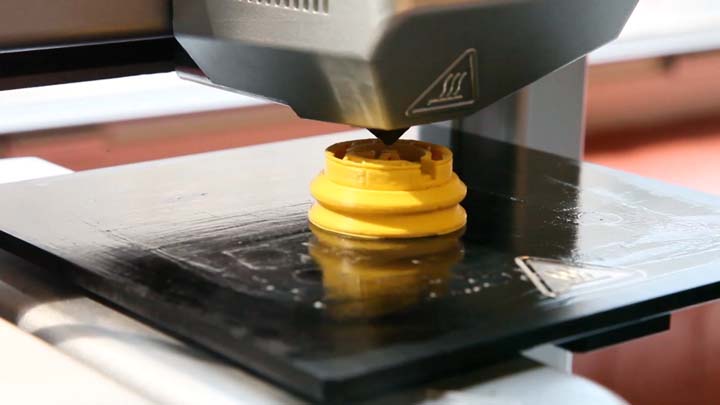 UL is working on an infrastructure to bring 3D printing technology to market safely. Image Courtesy of UL
Despite all its promise, 3D printing is still relatively immature when it comes to safety and quality control standards compared to more traditional manufacturing processes. That's according to UL, a quality and safety services organization committed to establishing a roadmap for 3D printing technology in the hopes of furthering its use.
"We believe additive manufacturing is a catalyst to enable unique products to be made and for new opportunities for companies and individuals interested in design," said Simin Zhou, UL's vice president, digital manufacturing technologies. "We want to make sure the infrastructure is there to bring the technology to market safety."
 UL's Simin Zhou is orchestrating partnerships to champion 3D printing quality and safety standards. Image Courtesy of UL
To do so, UL is working with a variety of companies—from 3D printer manufacturers, which it declined to name, to institutions like AmericaMakes, the Milwaukee School of Engineering and the University of Louisville. The company is looking to establish compliance guidelines, a quality assurance framework, material search and training tools, among other best practices, to balance safety concerns surrounding 3D printing technology with the industry's rapid pace of innovation.
The company's efforts fall into three categories, Zhou said.
Below is a corporate overview video produced by UL to provide some background on the organization.


Beth Stackpole is a contributing editor to Digital Engineering. Send e-mail about this article to [email protected].
Follow DE






About Us · Contact Us · Editorial Team · Advertising · Privacy Policy · Subscriber Services · © 2026 Digital Engineering 24/7 · Peerless Media