Helping design and engineering professionals discover, evaluate and specify technologies and processes that shorten the design cycle and enable success.


Alert!
Digital Engineering ceased publication on July 1, 2026. This website remains available as an archive of engineering content.
For inquiries or information, please email [email protected].

Digital Engineering April 2026
In the latest issue of Digital Engineering, we take a look at the latest innovations in design for additive manufacturing, including the use of natural language inputs, social media cosplayers, and AI integration. The issue also includes a feature…

January Special Focus Issue: Design for Additive
In this Special Focus Issue of Digital Engineering, learn about the latest advancements in design for additive manufacturing, including new software tools, additive in automotive, custom medical devices, and more.
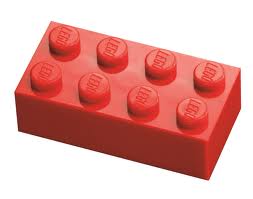
Lego and 3D printing have been in the news a fair amount recently, following an article in the Financial Times about the potential threat to the toy maker from AM. Both Time and The Washington Post have covered the story, talking with people at Lego and in the AM industry about the potential for later complications.
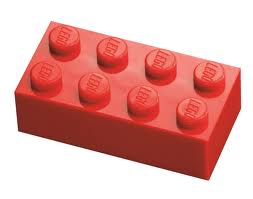
While those stories have mainly focused on the potential threat AM offers to Lego’s future, they don’t really have much to say about the possibilities offered by 3D printing. Lego already uses AM for rapid prototyping of new Lego kits, and an independent design team has developed a Universal Construction Kit that allows Lincoln Logs, K’NEX, LEGO and Tinkertoys to be used together. Both of those seem like positive outcomes of mixing AM and Lego.
Although Lego has denied the possibility of releasing digital models of their bricks for people to download and build, that seems shortsighted. It doesn’t take much more work than a quick Googling to find any number of digital designs for printing out your own building blocks that just may work with pre-existing Lego. For now, Lego claims that no 3D printer can match its own molding process for product quality, but that’s bound to change.
Why does any of this matter? It’s just a bunch of toys, right? Not necessarily. This sort of conundrum is the future for a number of businesses with high quality 3D printers becoming faster and less expensive. Lego needs to remember the chaos caused to the music industry by the advent of the internet and peer-to-peer sharing sites. Rather than ignoring the digital frontier, Lego, and other companies with intellectual property rights that may be threatened by AM, should embrace the future and figure out how to profit from the new technology.
Below you’ll find a video that demonstrates how a low-cost 3D printer can be used to build building blocks that are compatible with Lego.
Source: Washington Post


John Newman is a Digital Engineering contributor who focuses on 3D printing. Contact him via [email protected] and read his posts on Rapid Ready Technology.
Follow DE






About Us · Contact Us · Editorial Team · Advertising · Privacy Policy · Subscriber Services · © 2026 Digital Engineering 24/7 · Peerless Media