Helping design and engineering professionals discover, evaluate and specify technologies and processes that shorten the design cycle and enable success.


Alert!
Digital Engineering ceased publication on July 1, 2026. This website remains available as an archive of engineering content.
For inquiries or information, please email [email protected].
Sponsored

Cut Retrieval-Augmented Generation (RAG) Hallucinations by 50%
Most teams hit the same wall with enterprise AI: LLMs that hallucinate, pipelines that don’t scale, and infrastructure that’s harder to design than the models themselves.

What Is Intelligent BOM Management? A Guide to Smarter Product Development
Learn how intelligent Bill of Materials (BOM) management helps teams collaborate, reduce errors, and bring innovative products to market faster with cloud-based PLM tools.
Dear Desktop Engineering Reader:
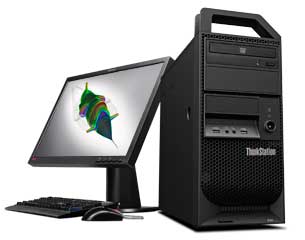 Today's Check It Out is about a blog just getting started. Lenovo, in partnership with Intel, recently started the “CAD/CAM Performance” blog. The idea here is to help improve the performance of your CAD/CAM applications by getting designers, engineers, and engineering managers together to share their hardware resources, tips, tools, and ideas.
The names Lenovo and Intel might provoke you to think marketing wolves in blogger's clothing. Yes, there is a marketing element; you can register and download some white papers. But it's not oppressive, and the three white papers available -- “Hardware Reference Architectures for AutoCAD,” “An Overview of Common AutoCAD Performance Issues,” and “Implementation Case Study: AutoCAD Performance Gains on Workstation Configurations,” are interesting, informative, and fair. The point is that they promised to provide -- and it appears they intend to deliver -- vendor-agnostic information on hardware for CAD/CAM.
So, what's going on here? Well, right now there are nascent discussions on AutoCAD and Creo. CATIA, NX, and SolidWorks tabs are built, but there are no posts yet. I'm told by a contact at Lenovo that they're working with their evangelists and building materials so that they can have the other discussions under way in a month. If these new discussions are anything like the what's there now, I can tell you that they will be user-centric as opposed to IT management oriented.
Bill Martin-Otto, whose business card (I assume; we've never met) reads CAD/CAM Evangelist, Lenovo, is the guy in action right now. He wrote the white papers I mentioned. And Martin-Otto gets right down to blogging. The first post in the AutoCAD discussion is “5 Reasons to Dump Your Desktop.” It's the argument that 2D AutoCAD users need to convince the boss that you need a real engineering workstation. Martin-Otto also wades into the ongoing debate on whether 2D AutoCAD users need a discrete graphics card or an integrated solution do the job.
Starting a blog is a leap of faith. I know, I've had a couple of jumps into the void. Lenovo and Intel have begun sewing the seeds of what sounds like a promising idea, and I commend them for striving to maintain vendor agnosticism.
The key to any good blog is good information and your participation. The CAD/CAM Performance blog's white papers alone are worth your checking out this new venture. And I am pretty sure that if you have any question about the hardware you need to optimize the performance of your CAD/CAM application, someone there will be able to help. Check it out.
Thanks, pal. -- Lockwood
Anthony J. Lockwood
Editor at Large, Desktop Engineering


Anthony J. Lockwood is Digital Engineering's founding editor. He is now retired. Contact him via [email protected].
Follow DE






About Us · Contact Us · Editorial Team · Advertising · Privacy Policy · Subscriber Services · © 2026 Digital Engineering 24/7 · Peerless Media