Helping design and engineering professionals discover, evaluate and specify technologies and processes that shorten the design cycle and enable success.


Alert!
Digital Engineering ceased publication on July 1, 2026. This website remains available as an archive of engineering content.
For inquiries or information, please email [email protected].

Digital Engineering April 2026
In the latest issue of Digital Engineering, we take a look at the latest innovations in design for additive manufacturing, including the use of natural language inputs, social media cosplayers, and AI integration. The issue also includes a feature…

January Special Focus Issue: Design for Additive
In this Special Focus Issue of Digital Engineering, learn about the latest advancements in design for additive manufacturing, including new software tools, additive in automotive, custom medical devices, and more.
Some of the complaints about new tech are sour grapes, some are misconceptions, and some represent justified fear. As an example, in the past, factory workers worried about robots taking their jobs, and more automation did indeed mean a reduction in workforce. Many of the jobs lost to an automatic screw tightener didn’t vanish, however, they just moved. The same people who tightened screws could learn how to maintain the machine that does it, and get paid more for their expertise.
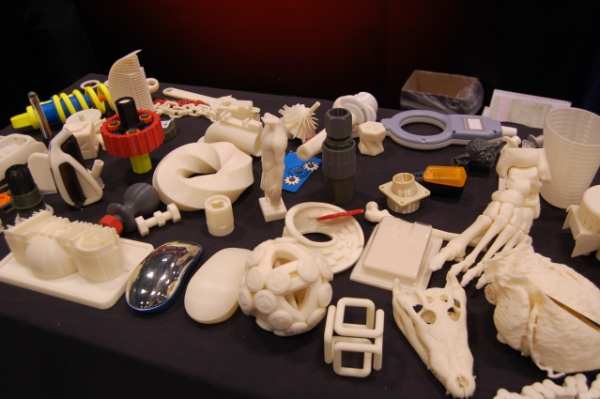
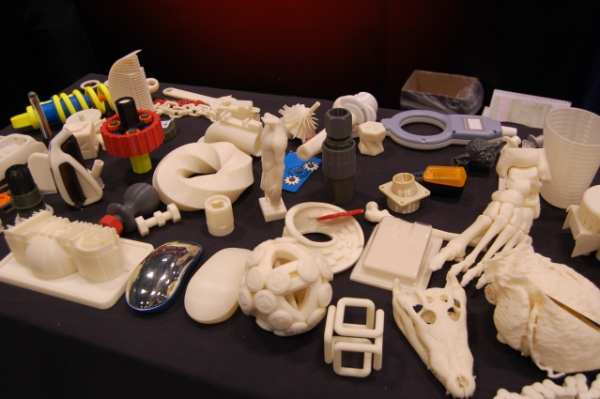
The same is true for 3D printing. While it might be tempting to focus on the negative aspects of this growing technology, that viewpoint neglects the overall picture. The key factors to keep in mind when considering the future of additive manufacturing are time and convenience.
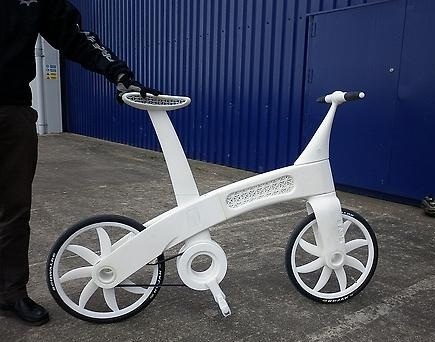
Even assuming a 3D printer suddenly appeared in every first-world household overnight, not much would change. Unless a serious breakthrough occurs, 3D printing takes time. Even small, simple objects require an hour or more to build. Further, most home 3D printers are quite small. The MakerBot Replicator tops out at 8.9 in. x 5.7 in. x 5.9 in. objects. While you could build, say, a bicycle with one, it would take awhile and require serious assembly.
Of course the technology will advance to become faster, but I think it’s reasonable to compare 3D printers with regular printers. Most people with PCs have a printer, and that printer is probably capable of printing in full color, including producing photographs. While the speed of an inkjet is light-years ahead of the old dot matrix printers, the size has remained about the same. I suspect that 3D printers will follow along the same lines. The big, industrial sized 3D printers will be too expensive for the average person to purchase, and will be more machine than they need.
That is also assuming that someone produces computer-aided design (CAD) software my mother would learn to use. Certainly you could rely on pre-existing CAD files for things like flyswatters, bottle caps and bookends, but many users would probably enjoy creating their own objects. Complex designs take more time, and more education. Unless you steal them.
That’s another potential problem people like to talk about. Pirate Bay (no, I’m not linking to them) has already begun to post what they call “physibles,” which are CAD files waiting to be printed. The Intellectual property (IP) debate doesn’t begin or end with additive manufacturing, however.
Unless you live in a cave, you probably heard the kerfuffle surrounding PIPA and SOPA. Of course, while people were protesting those, ACTA snuck in the back door. Most of the people behind these bills are giant corporations that were overcharging people for music and movies 10 years ago. It’s another example of the old guard fighting a losing battle against a new model of business.
IP, as it relates to actual goods instead of virtual ones, operates a bit differently.
Copyright essentially attaches to every original creative work that is fixed in a tangible medium. This includes most things that are written, drawn, or designed. However, the copyright only protects the actual writing, drawing, or design itself, not the idea that it expresses.— Michael Weinberg, staff attorney with Public Knowledge
What Mr. Weinberg is saying is that even if you printed out all the parts for a Huffy bike, made with CAD files that were based on a Huffy bike, unless you also include decorative elements (e.g. labels, paint schemes), Huffy might huff and puff, but there wouldn’t be much they could do about it. The picture becomes even cloudier if you combine Huffy-inspired parts with parts from another company, without using the decorative details from either.
So, you could print out your own bike, but (as shown above) when you take in to account the time it would take, plus the materials cost, plus the hassle of having to assemble 20 or so 8-in. parts, why would you? Some people might do it for the challenge, but most folks are just going to go to the nearest bicycle store and buy one that already has holes pre-drilled and tapped (don’t forget about the screws, either).
No doubt companies will fight back against this new brand of (as they see it) piracy by attempting to create broader labels for both copyrights and patents. I don’t think that will work. Broader definitions have the potential to stifle creative freedom of the individual, which, at least here in the U.S., the Supreme Court hasn’t had much truck with.
The solution isn’t more laws. Manufacturers should take a lesson from what has happened with the entertainment industry. Every attempt to cut off a head of the piracy beast has amounted to three more springing up in its place. The best solution is changing with the market. You need only to look as far as iTunes to see that if a product is offered at a reasonable price, in a convenient package, consumers will use legitimate means to buy.
Below you’ll find a video that also discusses some of these issues.
Source: Public Knowledge


John Newman is a Digital Engineering contributor who focuses on 3D printing. Contact him via [email protected] and read his posts on Rapid Ready Technology.
Follow DE






About Us · Contact Us · Editorial Team · Advertising · Privacy Policy · Subscriber Services · © 2026 Digital Engineering 24/7 · Peerless Media