Helping design and engineering professionals discover, evaluate and specify technologies and processes that shorten the design cycle and enable success.


Alert!
Digital Engineering ceased publication on July 1, 2026. This website remains available as an archive of engineering content.
For inquiries or information, please email [email protected].


Digital Engineering April 2026
In the latest issue of Digital Engineering, we take a look at the latest innovations in design for additive manufacturing, including the use of natural language inputs, social media cosplayers, and AI integration. The issue also includes a feature…

January Special Focus Issue: Design for Additive
In this Special Focus Issue of Digital Engineering, learn about the latest advancements in design for additive manufacturing, including new software tools, additive in automotive, custom medical devices, and more.
Specialized applications of AM can be even more time reliant. At RAPID 2012 (Rapid Ready coverage here), I was introduced to the use of 3D printed prototypes for rally car racing. Prodrive produces rally cars from Mini Countryman Cooper S stock. Paul Doe, chief designer — rally, told the assemblage about how the company leverages AM.

For those not familiar with rallying, the sport is as much about endurance as it is about speed. Rally events last for three or four days and typically cover around 400 miles. Instead of the nice, flat pavement you might be used to seeing if you watch NASCAR, rally events take place on gravel roads, run through muddy forest tracks and continue on through snowy and icy conditions.
Rally season begins in January and continues through November, which doesn’t allow for much of an off-season to prepare next year’s vehicle. This is the sort of atmosphere in which AM thrives. Rather than waiting a week to get a prototype back, a 3D printer produces the part in hours. This is particularly important for the process that goes into converting a stock vehicle into a rally-capable car.
According to Doe, nearly every part of the Mini is modified or replaced to get the car ready for rallying. By looking at a rally car, it can be difficult to tell what has been modified.
“In fact, the only thing carried over unmodified is the stainless steel skin of the front door. The rear door is carbon,” said Doe. “Parts of the door handles are carried over and some of the trim. Just about everything else you see is modified in some way.”
Doing that extensive of a redesign requires intense preparation. The team creates a CAD version of what they’d like the car to look like when they’ve finished, then they create a prototype to give them a hands-on feel. Prodrive selected a Stratasys Dimension 1200 es for its needs, looking for a 3D printer that could produce durable parts.
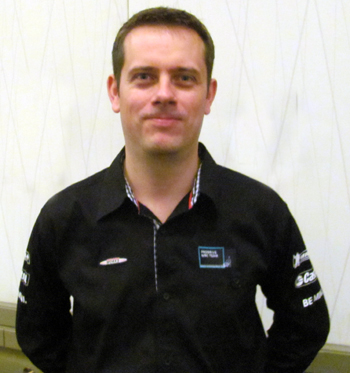
Prodrive found some unexpected benefits to using AM parts for the process. Doe told RAPID attendees that 3D printed prototypes fit better than those created through a more standard tooling process. The team also discovered the potential for end-use parts when one member of the team dropped a prototype and it bounced away across the floor. Once they recovered the part, the team found it was still good as new.
That experience led to Prodrive using AM to create parts directly for use in the car. In total, the Mini contains 18 different parts that were created by a 3D printer, including the driver display. The use of AM for the driver display also reduced the cost of the part significantly. The cost for the composite version was $400 for materials and $2,400 for tooling. Using AM, the total cost for the display was $70.
Prodrive’s success with AM is almost a poster child for 3D printing. As more industries embrace the technology, businesses will discover more and better uses for AM.
Below you’ll find a video of a Mini rally car being tested in the Irish countryside.
Source: Prodrive


John Newman is a Digital Engineering contributor who focuses on 3D printing. Contact him via [email protected] and read his posts on Rapid Ready Technology.
Follow DE






About Us · Contact Us · Editorial Team · Advertising · Privacy Policy · Subscriber Services · © 2026 Digital Engineering 24/7 · Peerless Media