Helping design and engineering professionals discover, evaluate and specify technologies and processes that shorten the design cycle and enable success.



Digital Engineering April 2026
In the latest issue of Digital Engineering, we take a look at the latest innovations in design for additive manufacturing, including the use of natural language inputs, social media cosplayers, and AI integration. The issue also includes a feature…

January Special Focus Issue: Design for Additive
In this Special Focus Issue of Digital Engineering, learn about the latest advancements in design for additive manufacturing, including new software tools, additive in automotive, custom medical devices, and more.
This cross between a pastry and a Chia Pet was thought up by food designer Chloe Rutzerveld. The printed snacks include a center made of agar, an edible goo that helps the seeds and spores grow.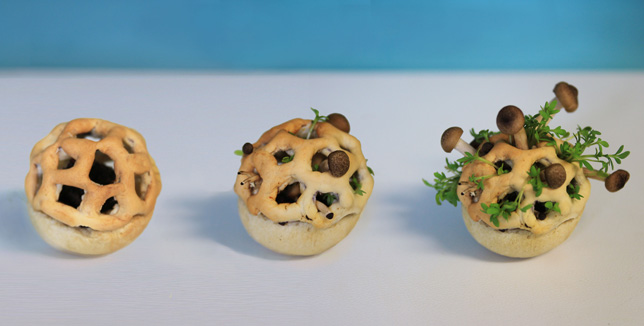
According to her website: "Within five days the plants and fungi mature and the yeast ferments the solid inside into a liquid. The product’s intensifying structure, scent and taste are reflected in its changing appearance. Depending on the preferred intensity, the consumer decides when to harvest and enjoy the delicious, fresh and nutrient-rich edible."
"As it comes out of the 3D printer you can really see the straight lines of the technology," she said. "But as it develops, you can see organic shapes. You can see the stages of growth and the development of taste and flavor."
Rutzerveld developed the solution with Eindhoven University of Technology and TNO, a research company, as a way to 3D print fresh and healthy food. It could be another eight to 10 years, by her estimates, before the solution could be commercialized.
I want to show that high-tech food or lab-produced food does not have to be unhealthy, unnatural, and not tasteful. Edible Growth is an example of high-tech but fully natural, healthy, and sustainable food made possible by combining aspects of nature, science, technology and design. Edible Growth shows real growth, an intensifying flavor and structure, makes smart use of natural processes like fermentation and photosynthesis and lowers the use of resources.
Rutzerveld made a film about the process at Dutch Design Week 2014, which you can view below.
Source: Dezeen


Brian Albright is the editorial director of Digital Engineering.
Contact him at [email protected].

Join over 90,000 engineering professionals who get fresh engineering news as soon as it is published.






About Us · Contact Us · Editorial Team · Advertising · Privacy Policy · Subscriber Services · © 2026 Digital Engineering 24/7 · Peerless Media