Helping design and engineering professionals discover, evaluate and specify technologies and processes that shorten the design cycle and enable success.


Alert!
Digital Engineering ceased publication on July 1, 2026. This website remains available as an archive of engineering content.
For inquiries or information, please email [email protected].

Artificial Intelligence for Design and Engineering Workflows
In this white paper, learn how artificial intelligence and machine learning can improve design and simulation.

Technology Focus: Designing for Optimization & Simulation
Simulation is pervasive, with people from different departments and backgrounds discovering new ways to put it to use, in all of its varied forms.
Now live in Autodesk Labs, Twitch is the company's experiment to deliver the latest versions of its bestselling software titles -- AutoCAD, Autodesk Inventor, Autodesk Revit, and Autodesk Maya -- over the Web. (The first three are online now, but Maya is forthcoming.) In theory, Twitch lets you try out these software right from your browser window -- without download, without installation.
This is the CAD giant's babystep into cloud computing, more a tiptoe than a leap. As such, it's not a highly publicized launch. It also comes with quite a bit of restrictions:
I live in San Francisco, the heart of the Bay Area, but apparently I don't meet one or more of the other parameters, so I couldn't get past the load screen shown below:
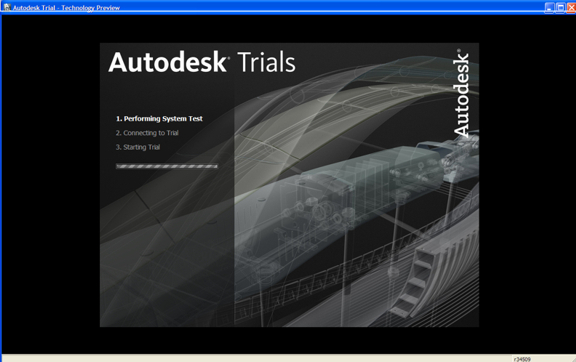
But, with Autodesk press office's help, I can show you what you would see if you were able to log on. Bear in mind, however, that you're in fierce competition. At the present, Twitch can only accommodate 50 simultaneous users at a time, Autodesk verified.
The project is as much a trial for you as it is for Autodesk. The company is observing how you use Twitch to better understand how it might deliver software over the Web in the future. It'll be some time before Autodesk makes Twitch available on a wider scale.
Both Autodesk and its rival Dassault Systemes have dabbled into cloud computing, or Web-hosted software, via Autodesk Project Freewheel (at Autodesk Labs) and Drawings Now (at SolidWorks Labs). Whereas these technologies function as lightweight CAD file viewers available in a browser window, Twitch is a pioneering effort to deliver full-function CAD modeling in a similar fashion.
In the early 90s, Alibre Design tried a similar delivery model, under the name Alibre ASP (application service provider), but bandwidth limitations and low CPU horsepower hampered the software's performance. Coming nearly two decades later, Autodesk's foray into cloud computing also faces the same hurdles, but to a lesser extent.
As a technology reporter, I look forward the widespread availability of Web-hosted software. One clear advantage: I won't have to download and install the products I review.
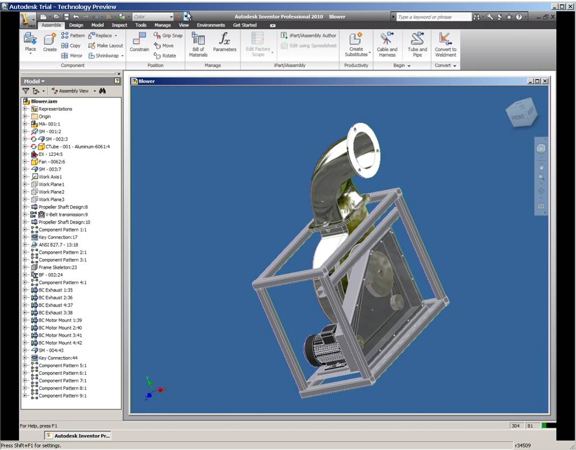
Update: Brian Mathews, VP of platform solutions and emerging businesses for Autodesk Labs, took at look at my log files to find out why I wasn't able to run Twitch. The following diagnostics are from his email, republished with his permission:


Kenneth Wong is Digital Engineering's resident blogger and senior editor. Email him at [email protected] or share your thoughts or suggestions at digitaleng.news/facebook.
Follow DE






About Us · Contact Us · Editorial Team · Advertising · Privacy Policy · Subscriber Services · © 2026 Digital Engineering 24/7 · Peerless Media