Helping design and engineering professionals discover, evaluate and specify technologies and processes that shorten the design cycle and enable success.


Alert!
Digital Engineering ceased publication on July 1, 2026. This website remains available as an archive of engineering content.
For inquiries or information, please email [email protected].


May 2026 Special Focus: Artificial Intelligence in Design and Simulation
In this Special Focus Issue, learn about the latest developments in the integration of artificial intelligence into engineering workflows.

April 2026 Special Focus Issue: Generative Design
In this Special Focus Issue, Digital Engineering takes a look at how generative design solutions can be used across different types of design problems and with a variety of manufacturing approaches to accelerate design space exploration, and…
Briggs Automotive Company (BAC) is adopting Siemens Digital Industries Software's Siemens Xcelerator portfolio of industry software. The company will use the Siemens tools to develop the next generation of Mono, its single-seater road legal race car.
BAC was founded in 2011 by Neill and Ian Briggs. The company's 570 kg Mono supercar is powered by a naturally aspirated 2.5-liter powertrain which develops 311 hp and 313 Nm of torque which translates to a power-to-weight ratio of 546 hp-per-tonne.
When combined with optimal weight distribution and the lightweight structure featuring BAC’s graphene-infused carbon panels, the result currently allows the Mono to sprint to 60 mph in just 2.7 seconds – which the team is looking to dramatically improve for the next-generation vehicle. This is where the transition to the Siemens Xcelerator suite comes in.
"Anything that helps us be ahead of the game and be ahead of anybody else. The reason we chose Siemens’ Designcenter software to develop the next generation of Mono is because it's the best – and it gives us the tools we need to take our vision to the next level,” said Ian Briggs, design director and co-founder. “Our vision was to create a car that simply didn't exist. The fundamental principle of a sports car is choosing excitement over utility, and we took that to the nth degree. Mono is that philosophy made real—a vehicle without compromise, built to prove that being ahead of the game means refusing to compromise on the driving experience.”
According to Briggs, one of the key drivers for the move to Siemens Designcenter is to solve the challenge serving a global customer base and certifying that a vehicle complies with the regulatory and safety standards set in a particular region or country. As Briggs explains, “A key challenge for us is homologating the car for the global market. Understanding the specific positional requirements for everything from headlights to driver sight lines is a complex minefield. The great advantage of Designcenter is that it allows us to build that entire regulatory framework directly into our 3D CAD model, giving us new levels of confidence and a greater speed of development.”
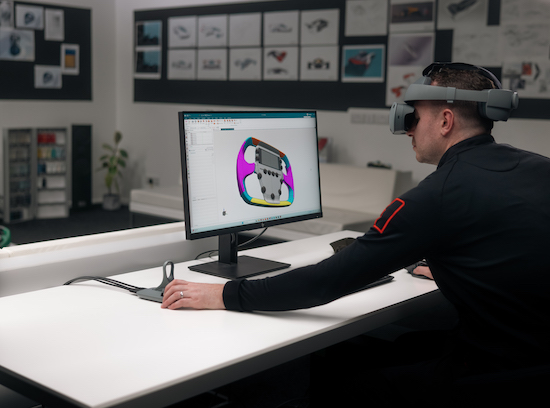
The BAC team are also exploring ways to enhance the customer buying and customization experience with Siemens’ immersive engineering technology (enabling customers to use immersive XR technology to experience their bespoke vehicles) all based on real-world 3D CAD data, presented in high-fidelity realism.
Eliott Marshall, production manager, BAC explains, “The thing that makes BAC truly unique is the bespoke elements. Siemens’ Immersive Engineering technology allows us to present to the customer exactly what they’re ordering. Being able to sit in their seat fitting jig and see all of the personal customisations they want around them, interact with them as if they’re already implemented, is going to get the fire burning within them.”
Sources: Press materials received from the company and additional information gleaned from the company’s website.


Simcenter™ software, from Siemens Digital Industries Software, uniquely combines system simulation, 3D CAE and test to help you predict performance across all critical attributes earlier and throughout the entire product lifecycle. By combining…
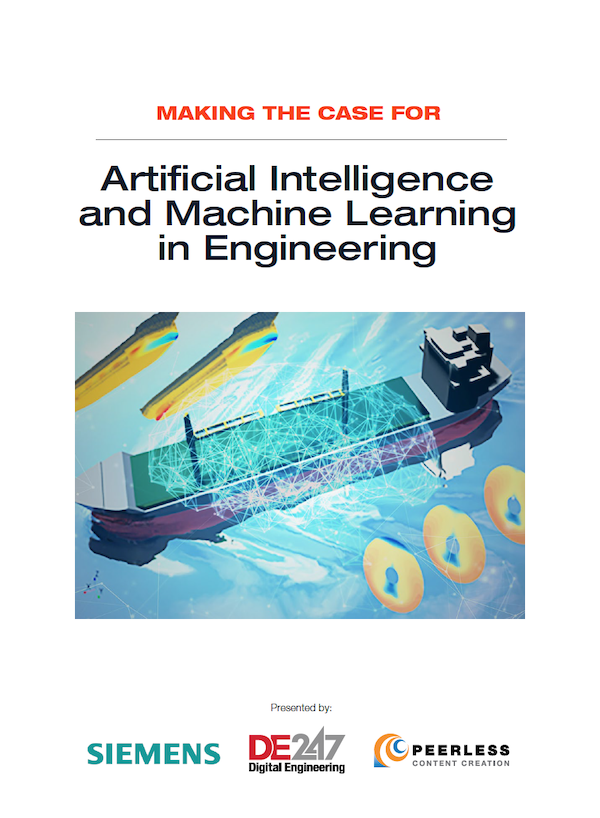
Making the Case for Artificial Intelligence and Machine Learning in Engineering
In this paper, Siemens Digital Industries Software and Digital Engineering will provide an overview of how AI/ML-enabled software can improve design workflows, while also addressing common questions and concerns around implementing this technology in an engineering organization.

DE's editors contribute news and new product announcements to Digital Engineering. Press releases may be sent to them via [email protected].
Follow DE






About Us · Contact Us · Editorial Team · Advertising · Privacy Policy · Subscriber Services · © 2026 Digital Engineering 24/7 · Peerless Media