Helping design and engineering professionals discover, evaluate and specify technologies and processes that shorten the design cycle and enable success.


Alert!
Digital Engineering ceased publication on July 1, 2026. This website remains available as an archive of engineering content.
For inquiries or information, please email [email protected].

Digital Engineering April 2026
In the latest issue of Digital Engineering, we take a look at the latest innovations in design for additive manufacturing, including the use of natural language inputs, social media cosplayers, and AI integration. The issue also includes a feature…

January Special Focus Issue: Design for Additive
In this Special Focus Issue of Digital Engineering, learn about the latest advancements in design for additive manufacturing, including new software tools, additive in automotive, custom medical devices, and more.
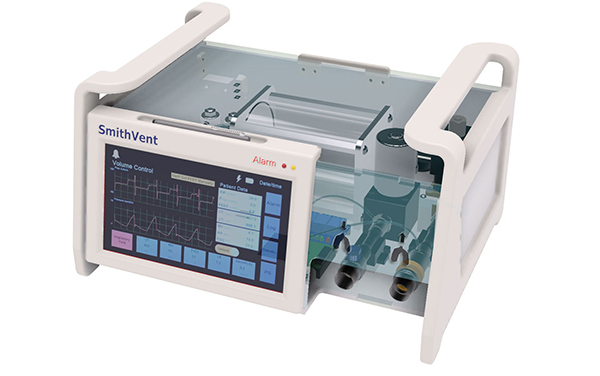
CoVent-19, the ventilator design challenge launched in April, came to an end this week. The winner is SmithVent, designed by a 30-person team from Smith College, according to the event organizers' press release.
The design challenge, hosted on GrabCAD and cosponsored by additive manufacturing (AM) systems maker Stratasys, was launched in April as "an open innovation effort to design a rapidly deployable mechanical ventilator."
The challenge was launched by Richard Boyer, MD, Ph.D., an anesthesiologists at Massachusetts General Hospital. (Read our previous report on the launch of CoVent-19 here.)
Seven finalists were selected for the prototyping and testing phase. This week, three winning designs emerged.
Just 3 months ago, we began our mission to deliver rapidly deployable #ventilators to the world.
— The CoVent-19 Challenge (@CoVentChallenge) July 1, 2020
213 entries from 43 countries, and 7 finalist designs later, we are THRILLED to announce our WINNERS! pic.twitter.com/doSZW9omEd
"The SmithVent design, which is one-tenth the cost of traditional ventilators, combines economical proportional solenoid valve technology with an air-oxygen mixing chamber to meet the full set of requirements for COVID-19 ventilation. The team relied primarily on readily available, off-the-shelf components, which reduced custom machining and improved compatibility with other medical equipment. The enclosure, ISO fittings, and mounting blocks can be produced using FDM or stereolithography 3D printers. The design is open source for anyone to use and improve," the organizers remarked.
The second-place winner was the InVent Pneumatic Ventilator, designed by the San Francisco-based fuseproject and medical-device startup Cionic.
The third-place winner was RespiraWorks, submitted by an international team.
"The three winners will receive a total of $10,000 in credits for 3D printing from Stratasys, which also provided access to free 3D printing and a team of three application engineers for the seven finalist teams building their working prototypes," the organizers announced.


Every day, our customers find simpler, smarter approaches to stubborn design problemsand greater confidence to confront towering human and technological challenges. Less hindered by the usual constraints, they can imagine, design, iterate and…
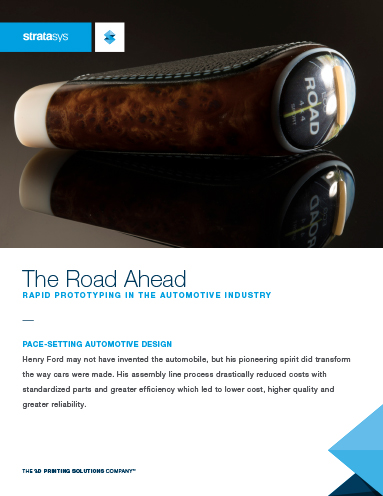
Rapid Prototyping in The Automotive Industry
Henry Ford may not have invented the automobile, but his pioneering spirit did transform the way cars were made. His assembly line process drastically reduced costs with standardized parts and greater efficiency which led to lower cost, higher quality and greater reliability.

Kenneth Wong is Digital Engineering's resident blogger and senior editor. Email him at [email protected] or share your thoughts or suggestions at digitaleng.news/facebook.
Follow DE






About Us · Contact Us · Editorial Team · Advertising · Privacy Policy · Subscriber Services · © 2026 Digital Engineering 24/7 · Peerless Media