Helping design and engineering professionals discover, evaluate and specify technologies and processes that shorten the design cycle and enable success.


Alert!
Digital Engineering ceased publication on July 1, 2026. This website remains available as an archive of engineering content.
For inquiries or information, please email [email protected].
Sponsored

May 2026 Special Focus: Artificial Intelligence in Design and Simulation
In this Special Focus Issue, learn about the latest developments in the integration of artificial intelligence into engineering workflows.

Design & Simulation Software Guide 2025
In this Special Issue, Digital Engineering presents its second annual guide to design and simulation software vendors.
The challenges of leveraging physics-based simulations throughout the engineering design process are well-known. Simulation is essential in product design, but can be extremely computationally intensive, making it impractical for real-time use and limiting its application. However, the growing need for accurate data earlier in the design phase is pushing OEMs to seek alternative approaches to shorten product development.
In this episode of DE Leadership Profile, a sponsored podcast series, Danilo Di Stefano, product manager for modeFRONTIER at ESTECO explains how adding AI data-driven modeling to modeFRONTIER software suite helps engineers deal with complex simulations. He also explains the advantages of using Proper Orthogonal Decomposition (POD) in Reduced Order Models (ROM) for high-dimensional data, and how the integration of Design of Experiments (DOE), Response Surface Models (RSM), and ROM improve the efficiency of AI and machine learning models.
“In this way, ESTECO’s AI data-driven modeling technology can significantly reduce the computation time needed when you perform design optimization”, Di Stefano said. “The AI-driven processes can automate various tasks, including design exploration, sensitivity analysis, and optimization … in this way accelerating the overall design process.”
For more information, visit www.esteco.com.

Intro and end music courtesy of Bensound.

About this podcast
Leadership Profile: ESTECO on the Value of AI-Powered Digital Engineering
March 26, 2025 at 10:00 am
11:11 hr/min/sec
Media file
Latest podcasts
Find us
Tune in to Digital Engineering 24/7's podcast and get engineering news, products and analysis from industry experts delivered in real time. Follow us on these popular platforms:

With almost 20 years’ experience, the company supports leading organizations in designing the products of the future, today. Our smart engineering suite brings enterprise-wide solutions for design optimization, simulation data management and…
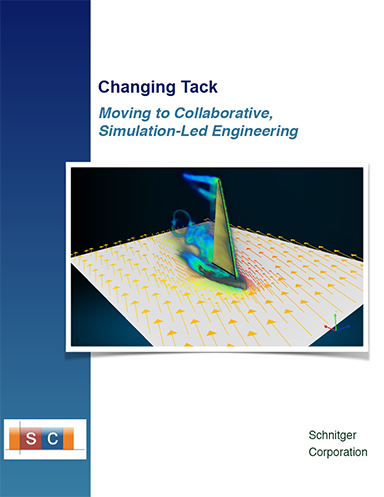
Moving to Collaborative, Simulation-Led Engineering
Simulation is an important part of any enterprise’s quest to create better products, more quickly. Optimizing early in a design cycle can jump-start innovation, enabling the team to explore more alternatives, more quickly — and to make trade-offs based on physical data rather than on gut feel.

Brian Albright is the editorial director of Digital Engineering.
Contact him at [email protected].






About Us · Contact Us · Editorial Team · Advertising · Privacy Policy · Subscriber Services · © 2026 Digital Engineering 24/7 · Peerless Media