Helping design and engineering professionals discover, evaluate and specify technologies and processes that shorten the design cycle and enable success.


Alert!
Digital Engineering ceased publication on July 1, 2026. This website remains available as an archive of engineering content.
For inquiries or information, please email [email protected].

May 2026 Special Focus: Artificial Intelligence in Design and Simulation
In this Special Focus Issue, learn about the latest developments in the integration of artificial intelligence into engineering workflows.

Design & Simulation Software Guide 2025
In this Special Issue, Digital Engineering presents its second annual guide to design and simulation software vendors.
Siemens Digital Industries Software’s latest version of the Simcenter Testlab software suite draws tighter synergies between the physical and virtual worlds, making test-based data accessible far earlier in the design cycle while maximizing the utility of the digital twin.
Simcenter Testlab, part of the Simcenter simulation portfolio, combines high-speed multi-physics data acquisition capabilities with a full suite of integrated testing, analytics, and modeling tools. The software covers acoustic testing, durability testing, dynamic environment testing, and structural dynamics testing, among other areas.
Simcenter Testlab is increasingly used not just at the later stages of development for testing and validation purposes, but far earlier in the cycle as a way to inject more realism into simulation models and the digital twin. “By capturing and analyzing data, engineers can investigate how the vehicle is performing compared to multiple targets and objectives along with the root cause of problems,” explains Bruno Massa, vice president of Simcenter testing solutions for Siemens Digital Industries Software. “The combination of hardware and software brings the verification done with simulation and virtual models closer to real life.”
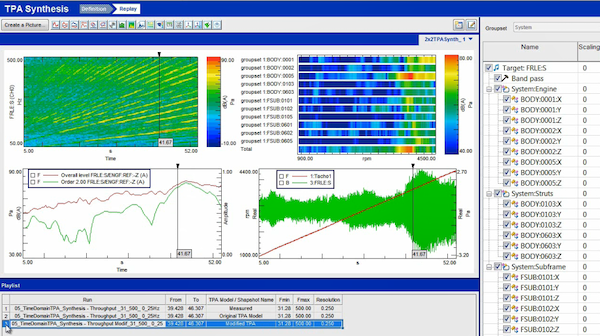
The Simcenter Testlab upgrade delivers a variety of functional enhancements while advancing model-based development with the introduction of model-based system testing. The latter helps to close the loop and enable system validation based on combined physical and virtual test models. In addition, component-based transfer path analysis (TPA) predicts full-system noise, vibration and harshness (NVH) performance earlier in the development cycle via the combination of component models and measurements, Siemens officials said.
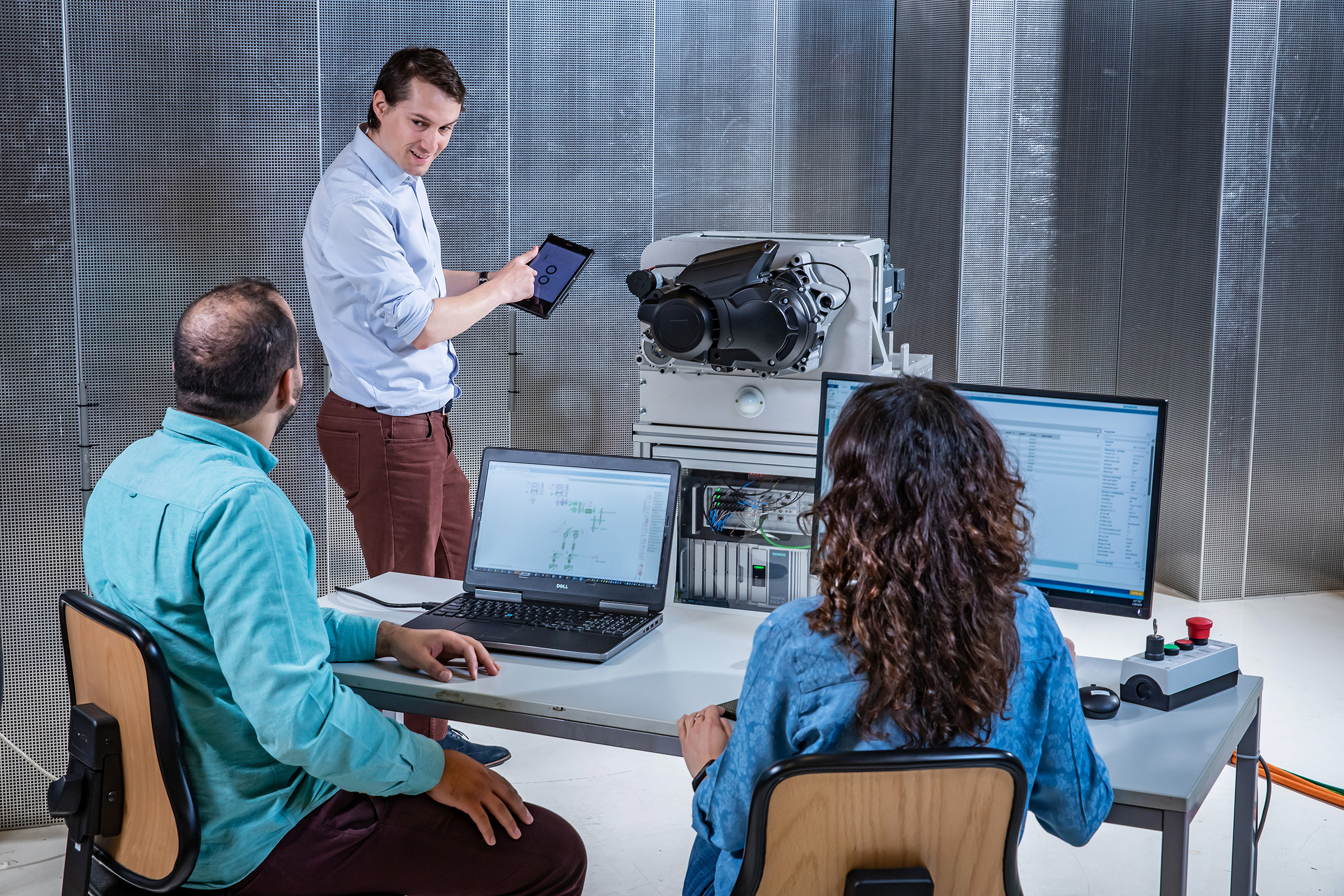
“The breakthrough value is that engineers can combine any subsystem or components on a physical test bench with the full system around it represented [in simulation],” explains Massa. “Engineers can physically test a gear box on a test bed while driving a specific vehicle on a specific road represented by a system simulation model. The simulation combines the two data streams—one from the virtual model and one from the physical test bed—creating one set of data that is really the digital twin in practice as deep as you can imagine.”
Other highlights of the release include:
To learn more about the latest Simcenter Testlab release, check out this video.


Simcenter™ software, from Siemens Digital Industries Software, uniquely combines system simulation, 3D CAE and test to help you predict performance across all critical attributes earlier and throughout the entire product lifecycle. By combining…
Making the Case for Artificial Intelligence and Machine Learning in Engineering
In this paper, Siemens Digital Industries Software and Digital Engineering will provide an overview of how AI/ML-enabled software can improve design workflows, while also addressing common questions and concerns around implementing this technology in an engineering organization.

Beth Stackpole is a contributing editor to Digital Engineering. Send e-mail about this article to [email protected].
Follow DE






About Us · Contact Us · Editorial Team · Advertising · Privacy Policy · Subscriber Services · © 2026 Digital Engineering 24/7 · Peerless Media