Helping design and engineering professionals discover, evaluate and specify technologies and processes that shorten the design cycle and enable success.


Alert!
Digital Engineering ceased publication on July 1, 2026. This website remains available as an archive of engineering content.
For inquiries or information, please email [email protected].

Digital Engineering April 2026
In the latest issue of Digital Engineering, we take a look at the latest innovations in design for additive manufacturing, including the use of natural language inputs, social media cosplayers, and AI integration. The issue also includes a feature…

January Special Focus Issue: Design for Additive
In this Special Focus Issue of Digital Engineering, learn about the latest advancements in design for additive manufacturing, including new software tools, additive in automotive, custom medical devices, and more.
It's not just lip service—companies are finally starting to take some real action around sustainability, making changes to product development processes, including the implementation of new materials and technologies to help achieve their enterprise goals.
That’s according to Protolabs’ Sustainability Report 2022, which surveyed 200 engineers, product designers, and other leaders to gain insight into trends. The report found that the lion’s share of respondents (90%) said their organizations have made notable corporate changes over the last two years that have led to incorporating sustainability goals as part of their core design objectives. In addition, 80% of engineers said that sustainability had a defined role in their company as either part of the product development process or integrated into everyday programs. Seventy percent of respondents said they have been involved with sustainability at some level for more than six years.
As part of their evolution, survey respondents are adopting a variety of technologies and practices to propel sustainability efforts. For example, 68% of survey respondents are looking to AI and design for sustainability practices as key enabler in addition to integration of electronics. Sustainable packaging was a primary area for 62% of respondents. In terms of process change, nearly half of those surveyed (47%) are embracing closed-loop product development processes while 40% see additive manufacturing technologies as a huge facilitator of sustainable design.
“Lightweighting continues to be a major focus, especially for aerospace and automotive customers where every ounce counts in terms of fuel efficiency,” notes Eric Utley, technical engineer with Protolabs. “3D printing allows us to consolidate the production of parts using a more sustainable additive process.”
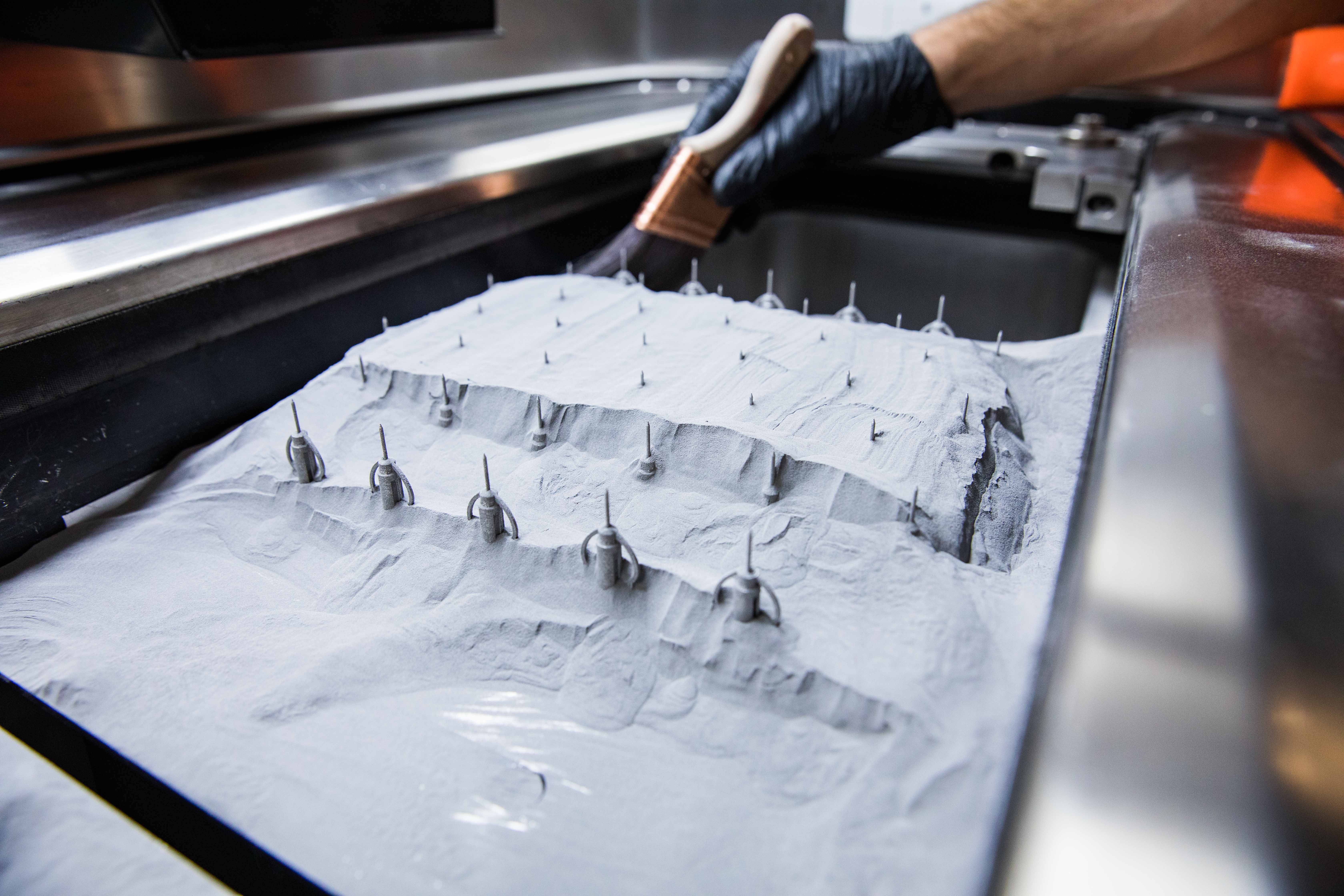
Specifically, Protolabs sees powder bed technologies like MultiJet Fusion, Direct Metal Laser Sintering (DMLS) and Selective Laser Sintering (SLS) as especially beneficial for advancing sustainability goals. “They allow you to eliminate material waste because any unused powder in a build can be re-used in new builds,” Utley says. “This is especially true for DMLS when you compare it to CNC machining and the material waste is significantly less.”
The survey also found sustainability means different things to different organizations. Seventy-nine percent of companies said they consider sustainability a culture or product development initiative while 21% view sustainability as a mandate to do the right thing. Individuals responsible for setting sustainability strategy have more confidence that any related implementations will be successful than those responsible for actually carrying out the work.
Specific sustainability targets or goals tend to vary by industry. For example, automotive respondents see meeting government regulations as their top challenge, while medical device companies have regulatory compliance as well as making manufacturing processes more sustainable and safe as their primary goals. When it comes to actual design goals, aerospace manufacturers cited fuel-related concerns as their primary sustainability target while medical device makers want to leverage AI in design as part of their sustainability agenda.
Universally, Utley says companies are closely evaluating their supply chain for opportunities to increase sustainability at every step in the product development process. “Digital manufacturing will allow for virtual product iteration and on-demand production—benefits over traditional manufacturing methods,” he explains. “The ability to offer on-demand production allows companies to produce only the parts they need when they need them. That lets them eliminate their reliance on warehouse storage and excess parts due to the shifting market demand.”
While companies are definitely making strides, challenges remain—especially the overall corporate attitude towards sustainability. Respondents said sustainability initiatives tend to be driven by regulations and fiscal concerns, yet nearly a third said their company still hadn’t established sustainability-related KPIs.
Check out this video to learn how Protolabs is advancing sustainability at one of its manufacturing plants through solar power.


Proto Labs is the world's fastest source for custom prototype and low-volume parts. Our 3D printing, CNC machining and injection molding services utilize proprietary computing technology and automated systems to produce quality parts in a…
Designing for Automotive/Transportation
The automotive industry is past the point of talking about the disruption coming from demand for electric vehicle powertrains or the potential of autonomous vehicles, and well on its way to responding to those disruptions thanks to advanced engineering technologies. Download this special digital edition.

Beth Stackpole is a contributing editor to Digital Engineering. Send e-mail about this article to [email protected].
Follow DE
Join over 90,000 engineering professionals who get fresh engineering news as soon as it is published.






About Us · Contact Us · Editorial Team · Advertising · Privacy Policy · Subscriber Services · © 2026 Digital Engineering 24/7 · Peerless Media