Helping design and engineering professionals discover, evaluate and specify technologies and processes that shorten the design cycle and enable success.


Alert!
Digital Engineering ceased publication on July 1, 2026. This website remains available as an archive of engineering content.
For inquiries or information, please email [email protected].
The robot is created by NASA's Jet Propulsion Laboratory (JPL) for the competition which consists of several disaster-related tasks. The sensor can rotate a full 360º up to 20 times per second as well as between 10º up and 30º down.
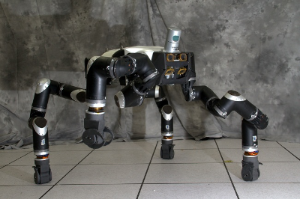 The RoboSimian robot.
RoboSimian moves on four limbs, making it ideal for travel over complex terrain. JPL researchers are currently working on improving the robot's speed.
"The NASA/JPL robot was developed expressly to go where humans could not, so the element of sight – in this case, LiDAR-generated vision – is absolutely critical,” said Wolfgang Juchmann, director of sales & marketing, Velodyne. “We’re recognized worldwide for developing real-time LiDAR sensors for all kinds of autonomous applications, including 3D mapping and surveillance as well as robotics. With a continuous 360-degree sweep of its environment, our lightweight sensors capture data at a rate of almost a million points per second, within a range of 100 meters – ideal for taking on obstacle courses, wherever they may be.”
For more information, visit Velodyne LiDAR.
Sources: Press materials received from the company and additional information gleaned from the company’s website.


DE's editors contribute news and new product announcements to Digital Engineering. Press releases may be sent to them via [email protected].
Follow DE






About Us · Contact Us · Editorial Team · Advertising · Privacy Policy · Subscriber Services · © 2026 Digital Engineering 24/7 · Peerless Media