Helping design and engineering professionals discover, evaluate and specify technologies and processes that shorten the design cycle and enable success.


Alert!
Digital Engineering ceased publication on July 1, 2026. This website remains available as an archive of engineering content.
For inquiries or information, please email [email protected].
May 2026 Special Focus: Artificial Intelligence in Design and Simulation
In this Special Focus Issue, learn about the latest developments in the integration of artificial intelligence into engineering workflows.

Design & Simulation Software Guide 2025
In this Special Issue, Digital Engineering presents its second annual guide to design and simulation software vendors.
On Sept. 3 in Cleveland, NAFEMS hosted “Digital Tools for Transforming the Aerospace Industry,” a two-day event for simulation engineers in the aerospace industry. In addition to a full day of in-person sessions, attendees also participated in a tour of the NASA Glenn Research Center.
The conference opened with a keynote from Dr. Patrick Safarian, FEA Senior Technical Specialist at the Federal Aviation Administration (FAA), who presented remotely. Safarian discussed the use of finite element analysis (FEA) as part of an FAA certification plan. He outlined parts of current FAA guidance that allow for simulation as a means of validation instead of physical test. He emphasized that quality software was important, along with the knowledge and experience level of the analysts involved in the process, and stressed the need for developing an accurate free body diagram that includes all loads and boundary conditions.
“You have to have an expectation of the results,” Safarian said. “When you want to perform a test for global FEA, we require applicants to develop their expected results. There needs to be a reasonable delta, and it is essential that at every stage, those results are validated.”
He also noted that experienced analysts are responsible for the fidelity of the model and the correctness of the simulation results. “You can be accurate without being correct,” he said. “You can have an accurate FEA simulation that does not represent the behavior of the structure correctly. Results should be viewed with skepticism until proved not guilty, so to speak.”
Madhu Vellakal of Rescale presented “Accelerating CFD: How AI Models Like MeshGraphNets and DoMINO Are Reshaping Engineering.” He discussed Rescale’s capabilities in developing surrogate models to accelerate analysis.
Manish Barlingay of Goengineer spoke about an “Integrated Framework to Accelerate Development of Surrogate Models for Numerical Simulation.” He discussed the challenges of developing surrogate models (including time and cost) and how Goengineer has created a drag-and-drop approach to enable some automation.
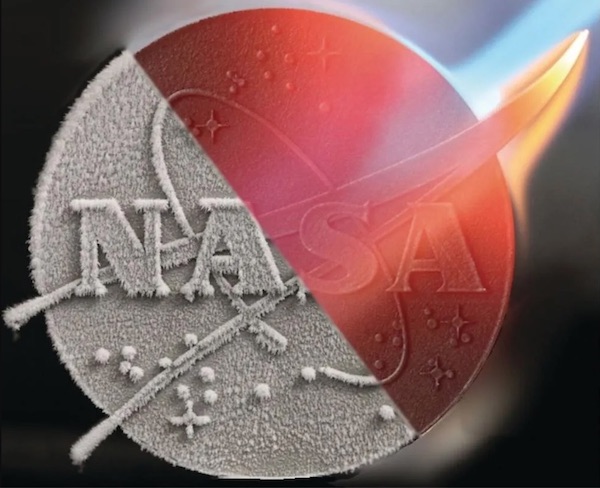
Steve Arnold of the Cleveland-based NASA Glenn Research Center provided an overview of NASA’s MicroNet Assistant Tool, and how NASA has been able to cut down development time for novel materials.
“Virtual testing can enable significant cost savings in the certification process,” Arnold said. “Top performing organizations want new materials to innovate, but traditional development time on materials is about 20 years.”
Using their own tools, NASA was able to develop the new GRX-810 material in just three years, which he said helped bridge the gap between designing the material and designing with the material in order to achieve “fit for purpose” materials.
Arnold discussed the Integrated Computational Materials Engineering (ICME) project, and NASA’s efforts to achieve a “digital twin” of materials for micromechanics. He also described the NASA Multiscale Analysis Tool (NASMAT), which is a free-to-access solution that uses multiscale recursive micromechanics for massively multiscale modeling of hierarchical materials and structures.
What NASA has developed is a machine learning model that can automatically segment fibers in a material specimen during testing. Their internal team developed the MicroNet Assistant Tool, an open source tool that can mimic a relatively small number of material images very quickly with a minimal amount of training. The tool takes care of all the time-consuming annotation and labeling.
“The geometry can be directly exported to NASMAT for microscale simulations,” Arnold said. “There is a fiber recognition algorithm to recognize fibers and segment the image better with very minimal effort.” MicroNet helps enable the creation of a material digital twin.
“The power of machine learning is that we can get statistical distribution of the features that we want to include in the models, so we can put uncertainty and statistics into methods where we could never do that before.”
MicroNet and MicroNet Assistant will eventually be publicly available for other users.
Trent Ricks of NASA discussed lessons learned from integrating a surrogate model into FEA. Replacing high-fidelity simulation methods with surrogate models can help overcome compute and time limitations that make that type of analysis difficult to impossible without access to a supercomputer.
In their testing, NASA found that using a machine learning surrogate was able to accurately capture nonlinear material behavior accurately. NASA also compared NASMAT (which is a physics-based tool) and surrogate models, and while there was not a significant speed up, there was a significant memory benefit – with 400X less memory required for the surrogate. “Even if the run time is about the same, having less memory footprint allows you to simulate much larger problems than you could have before,” Ricks said.
The event also included a presentation on AI Copilots for thermal modeling from CompLabs; an overview of Model-Based Systems Engineering from VES; centralized collaboration from Istari Digital; combining CFD and Physics AI from Luminary Cloud; and additional sessions from Hexagon Manufacturing Intelligence, Kitware, and Dassault Systèmes.
NAFEMS has two more industry-specific events scheduled this year. On Oct. 9, the organization will present the Advancing the Food, Beverage and Consumer Packaging Industry Through Modeling & Simulation Engineering event at the PepsiCo Facility in Valhalla, NY, including presentations from the host company. On Nov. 6, NAFEMS will hold the Simulation Engineering in the Automotive Industry event at the Management Education Center (MEC) in Troy, MI, including keynotes from Dow Chemicals and Stellantis.
NAFEMS members and attendees can access presentations from the aerospace event here.


NAFEMS is the International Association for the Engineering Modelling, Analysis and Simulation Community. We focus on the practical application of numerical engineering simulation techniques such as the Finite Element Method for Structural…
Simulation Focus: Conference on Advancing Analysis and Simulation in Engineering (CAASE) Preview
The CAASE18 (Conference on Advancing Analysis and Simulation in Engineering) kicking off June 5-7, 2018 on the south shore of Lake Erie in Cleveland, OH plans to take the engineering analysis community by storm. The event is expected to play host to potentially 500 attendees from nearly 250 companies while delivering a wealth of educational opportunities covering all facets of engineering analysis and simulation.

Brian Albright is the editorial director of Digital Engineering.
Contact him at [email protected].






About Us · Contact Us · Editorial Team · Advertising · Privacy Policy · Subscriber Services · © 2026 Digital Engineering 24/7 · Peerless Media