Helping design and engineering professionals discover, evaluate and specify technologies and processes that shorten the design cycle and enable success.


Alert!
Digital Engineering ceased publication on July 1, 2026. This website remains available as an archive of engineering content.
For inquiries or information, please email [email protected].

May 2026 Special Focus: Artificial Intelligence in Design and Simulation
In this Special Focus Issue, learn about the latest developments in the integration of artificial intelligence into engineering workflows.

April 2026 Special Focus Issue: Generative Design
In this Special Focus Issue, Digital Engineering takes a look at how generative design solutions can be used across different types of design problems and with a variety of manufacturing approaches to accelerate design space exploration, and…
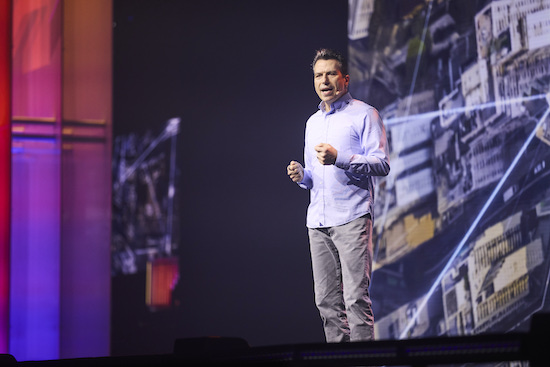
In his opening keynote at Autodesk University 2025 (AU2025), Autodesk CEO Andrew Anagnost pointed out that attendees are living in “consequential times,” when companies are struggling to meet the increasing demand to build and produce more than any other time in history, and while AI and machine learning models are advancing faster than anyone expected.
“All of us are consequential, and we get to decide what happens next,” he said. And in the case of Autodesk, what happens next is clearly a heavy investment in AI technology across the company’s product portfolio.
As part of that process, Autodesk introduced its three industry clouds – Forma (construction), Flow (entertainment) and Fusion (manufacturing) – that are built on new code bases, but can still work with existing Autodesk tools. Autodesk artificial intelligence is native to all the industry clouds.
At the event, the company announced improvements to its AI-based Autodesk Assistant, originally introduced last year. In Fusion, the tool makes it easier to onboard stakeholders to collaborate on designs, and automates sketch constraints and manufacturing toolpaths. In Autodesk Vault, Assistant offers natural language search and can complete some actions like updating drawings. It can also push a Bill of Materials to PLM workflows in Fusion Manage.
Autodesk is also collaborating with Microsoft to add more AI capabilities into Fusion. According to Autodesk: “Tapping into Microsoft’s AI services like Azure OpenAI Service and models such as GPT-image-1, users can take Fusion designs, place them in context, and generate photorealistic images. For example, a newly-designed air fryer can be placed in a kitchen. That information can then be exported to Microsoft 365 and converted to a Microsoft PowerPoint presentation, eliminating the need for users to manually produce creative collateral.”
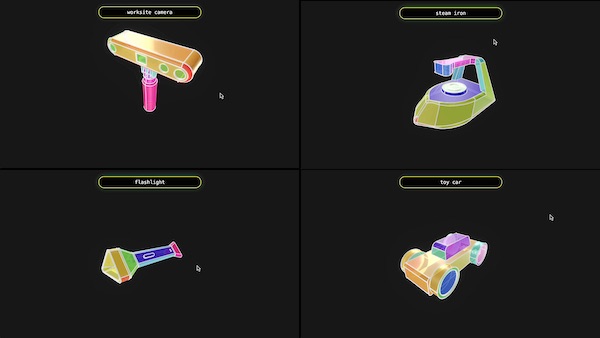
The biggest AI-based innovation in Fusion, however, is the ability to use Generative AI to create an editable geometry. Based on Autodesk’s proprietary foundation models for manufacturing, the feature allows users to generate a detailed geometry from a single prompt and get a fully editable CAD output. This neural CAD concept grew out of the previously announced Project Bernini research in 2024. Once available, this would be the first text-to-CAD solution available in a major CAD software suite. (Exactly when that will happen has yet to be announced.)
In his speech, Anagnost used a simple prompt to generate a basic design for an air fryer. He also explained how the Sketch environment has been improved to quickly fix errors, and announced a new constraint command that makes it easier to position geometry in a 3D space.
Autodesk is developing a range of neural AI foundation models for design. The neural CAD foundation model is directed at industrial and architectural problems, and will be commercially available at some point in the future in both Fusion and Forma.
“What we are building will change the way people interact with design systems,” Anagnost said in a media briefing later at the event. “Previously everything was restricted by parametric kernels. That goes away. Agents will assemble models and interact with human designers.”
In addition, Fusion can be connected to MS Office, Autodesk Vault, and PLM tools. The company also demonstrated a new graphing environment to connect models to manufacturing instructions, and then allow customers to use that graph or pattern on other similar parts.
Anagnost emphasized that there will still be a human in the loop, even with generative AI creating CAD models. “What we are aspiring to do is make it easier for the engineer and the architect to evaluate a series of options, refine an option,and be the arbiter of what the actual final answer is.”
He also noted that these features can lower the bar of complexity when it comes to using CAD. “More people can participate in the process,” he said. “Peopl further down the chain can do what big firms are doing today” using simpler tools.
Because the models used in the AI features are trained on both customer data and synthetic data, there also needs to be protection of intellectual property. Anagnost said that “if something is generated by our model that looks like something in the training set, we throw that result away. That protects IP, but lets the models create powerful things.”
He also said that Autodesk has provided additional context into the decision making process for its AI tools to reduce the chances of AI hallucinations. “That’s what the foundation models are,” he said. “You provide additional context and training to specific problems, so the chance of hallucination is near zero, because you are being very specific.”
Autodesk also announced it had acquired the OneIPM cloud-native project management tools, which will provide integrated project management, PDM, and PLM features in Fusion.


Brian Albright is the editorial director of Digital Engineering.
Contact him at [email protected].






About Us · Contact Us · Editorial Team · Advertising · Privacy Policy · Subscriber Services · © 2026 Digital Engineering 24/7 · Peerless Media