Helping design and engineering professionals discover, evaluate and specify technologies and processes that shorten the design cycle and enable success.


Alert!
Digital Engineering ceased publication on July 1, 2026. This website remains available as an archive of engineering content.
For inquiries or information, please email [email protected].

May 2026 Special Focus: Artificial Intelligence in Design and Simulation
In this Special Focus Issue, learn about the latest developments in the integration of artificial intelligence into engineering workflows.

April 2026 Special Focus Issue: Generative Design
In this Special Focus Issue, Digital Engineering takes a look at how generative design solutions can be used across different types of design problems and with a variety of manufacturing approaches to accelerate design space exploration, and…
As Halloween approaches, engineers begin sculpting and carving digital pumpkins in their favorite CAD programs, and simulation specialists start running aerodynamic analysis of flying witches and headless horsemen. Some dug up old projects, put a new shine on it in the latest rendering program, and resurrected their 3D ghosts.
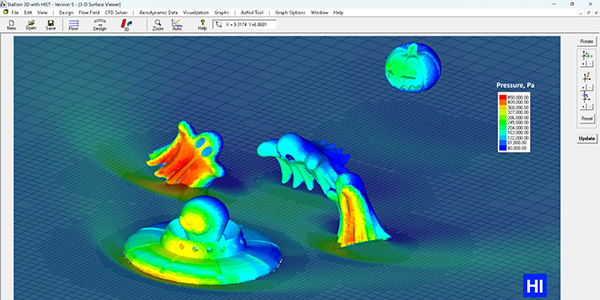
Patrick Hanley, Founder at Hanley Innovations, usually shares airflow analysis of planes, UAVs, and airfoils, among others, but this week, he shared a Halloween-inspired scene created in Stallion 3D. "A space visitor is startled by the sudden appearance of multiple anomalies during the October 31 visit to Earth," he wrote.
If you don't have a front porch to display your carved pumpkins, you could do what Michael LaFleche did: set up your Halloween display in CAD and render it. He did it in the browser-based CAD program Onshape, but the basic manipulation and postioning tools work the same way in many mainstream CAD programs.

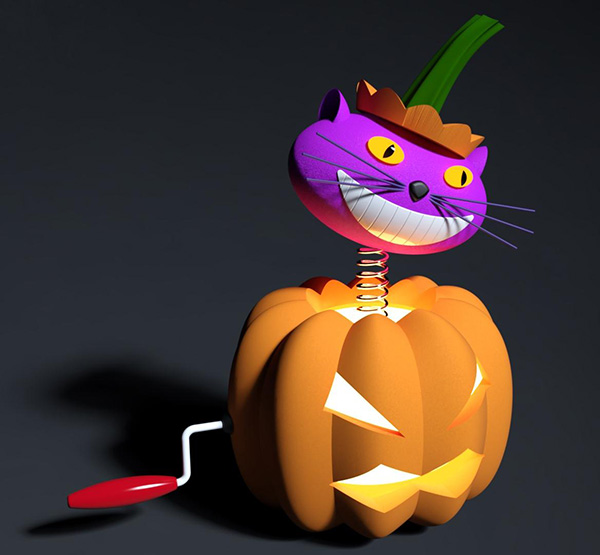
Brian Langrange, also an Onshape user, launched an unofficial Onshape render battle on the user forum. His own creation was a pumpkin with a popup Cheshire cat head.
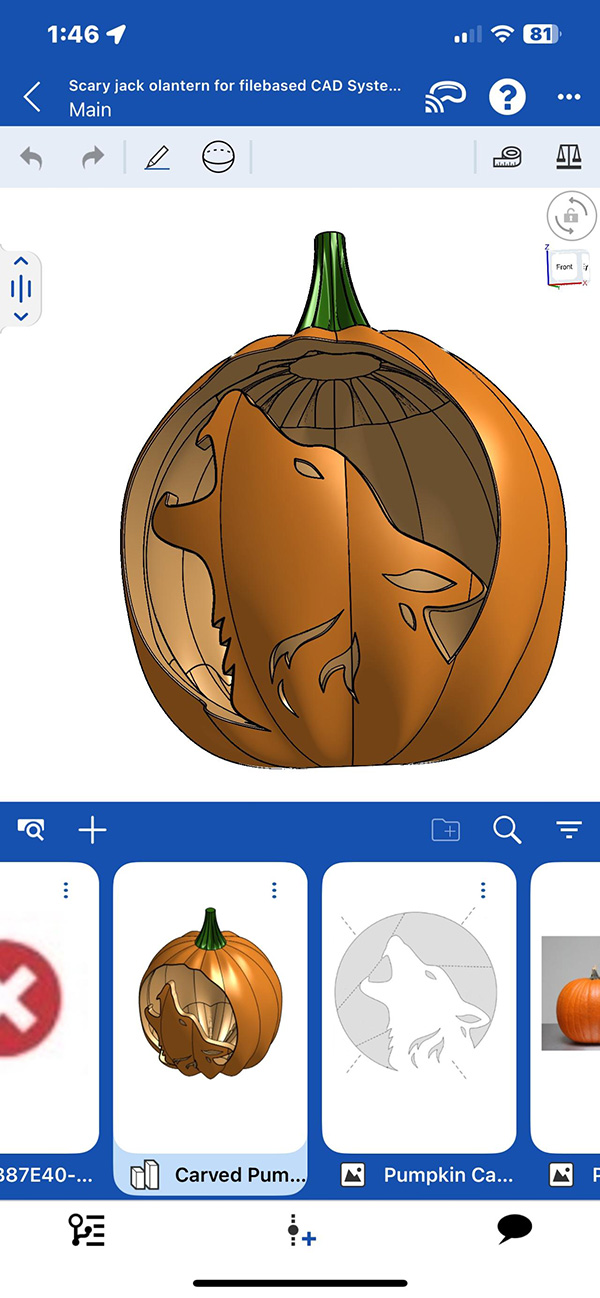
Another Onshape user, Alex Arevalo, produced a 3D pumpkin with a howling wolf carved on it. "I used an image as the backdrop to trace out the cutaway of the wolf. Initially the inspiration was for a Halloween modeling contest couple of years ago, but I never got around to entering it," he explained.
Andrew Johnson, Founder of Digital Rocket Science, created a 2D pumpkin and simulated the airflows around it with Digital Dynamics Studio, an online FEA program aimed at STEM students. "I added a heat source at the center of the pumpkin to mimic the candle's heat-source, then buoyancy-driven convective flow takes over from there. Gravity in this simulation is pointing inwards, so the convective plums emanate radially from the surface," he explained. "A 3D simulation may help identify other vent holes or geometries in the carving that would dissipate the heat better. But for this exercise, 2D is just fine, and buoyant convective flow from the surface always creates some truly beautiful results and animations."

If you need some help creating your own Halloween scene, Imre Scuzs's Solid Edge tutorial video could give you guidance.
Giles Richardson, a CFD service provider, was exploring the use of unsteady sliding mesh in his analysis of fan blades. But possessed by the Halloween spirit, he wondered if he could use the same approach on a pumpkin. "The pumpkin does not have any material properties. It's just a hollow body ... I chose pressure contours for the pumpkin surface, to show aerodynamic relevance. The streamlines help to show the airflow around the body, but it was a bit tricky to get continuous lines through the moving mesh region," he recalled.
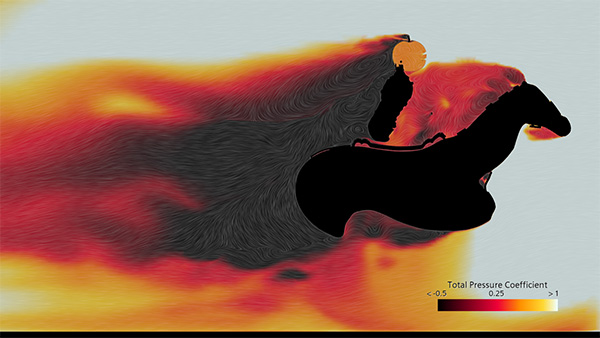
Simon Fisher and Stephen Gross resurrected the headless horseman from Washington Irving's spine-tingling American ghost story. They added a CFD twist by running analysis in Simcenter, Siemens' simulation software. "Thanks to Simcenter STAR-CCM+ we had a serious prediction of aerodynamics and related drag coefficients with and without the pumpkin head," they wrote in a blog post, as an imaginary interview with the headless horseman himself. "As the data reveals there is a noticeable reduction of the recirculation area in the wake of the Horseman, if he goes without top. And with the help of collaborative Virtual Reality in Simcenter STAR-CCM+ the engineers could even walk the bodyless pumpkin head through the CFD results"
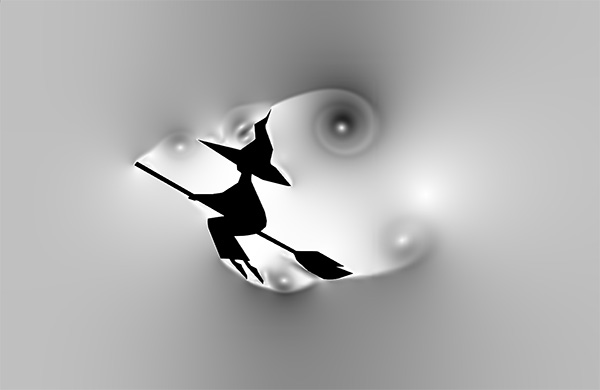
If the Solid Edge headless horseman is airborne, there's a chance he might collide with a flying witch. Abi, a senior mechanical engineering student, snatched the 2D image of a witch from a website, traced it and converted it into STL, then ran CFD analysis using OpenFOAM v12.
Mark Norwood of Norwood Designs created and rendered his pumpkin in SOLIDWORKS. He rendered the model in the software's built-in renderer, RealView Graphics. Norwood is currently learning to use Blender, so next Halloween, his pumpkin may be more polished (in a manner of speaking).

Hally Halloween to DE 24/7 readers!


Onshape’s modern CAD system frees engineers to focus on doing their best work. Unlike old CAD systems, Onshape unites modeling tools and design data management in a secure cloud workspace that is accessible on any device, never loses data, and…

Modern CAD for Medical Device Design
In this eBook, you’ll read insights from three successful companies who recently switched to a modern, cloudbased CAD system.

Kenneth Wong is Digital Engineering's resident blogger and senior editor. Email him at [email protected] or share your thoughts or suggestions at digitaleng.news/facebook.
Follow DE






About Us · Contact Us · Editorial Team · Advertising · Privacy Policy · Subscriber Services · © 2026 Digital Engineering 24/7 · Peerless Media