Helping design and engineering professionals discover, evaluate and specify technologies and processes that shorten the design cycle and enable success.


Alert!
Digital Engineering ceased publication on July 1, 2026. This website remains available as an archive of engineering content.
For inquiries or information, please email [email protected].

Digital Engineering April 2026
In the latest issue of Digital Engineering, we take a look at the latest innovations in design for additive manufacturing, including the use of natural language inputs, social media cosplayers, and AI integration. The issue also includes a feature…

January Special Focus Issue: Design for Additive
In this Special Focus Issue of Digital Engineering, learn about the latest advancements in design for additive manufacturing, including new software tools, additive in automotive, custom medical devices, and more.
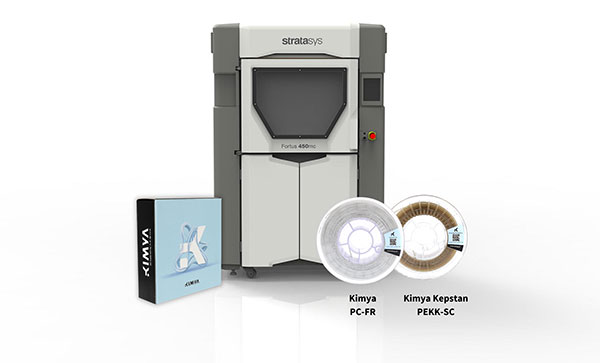
Stratasys has selected KIMYA to provide Stratasys Validated materials for its fused deposition modeling technology-based systems, which were previously closed to third-party filaments.
With the integration of KIMYA into its ecosystem, Stratasys can offer a wider range of materials. KIMYA now offers Stratasys’ industrial customers two new materials: EN45545–2 certified polycarbon filament (Kimya PC-FR) and a polyetherketone filament made from Arkema's KEPSTAN
(Kimya PEKK-SC). These two materials will be marketed from the second half of 2022 and will be used in particular in the rail and oil industries.
"We are expanding our ecosystem of materials to offer our customers a wide range of 3D printing technologies and solutions, while ensuring our customers maintain the utmost confidence in the performance of these filaments. That's why we partner with excellent companies like KIMYA, whose expertise in custom 3D material formulation includes the production of finished parts with use value," says Adam Pawloski, vice president of
Manufacturing Solutions at Stratasys.
These initial materials begin what both companies say should be a long-term partnership to accelerate the adoption of additive manufacturing at production scale. Stratasys and KIMYA also initiated an R&D program with the goal to bring new co-branded filaments to market by spring 2023. For example, KIMYA brings expertise in formulating recycled 3D materials that could be applied to the collaboration.
Additionally, through the provision of a Stratasys Open Materials License, KIMYA can work directly on the printing parameters of Stratasys printers to develop new custom materials.
"Together, we will be able to offer manufacturers new innovative and high-performance materials capable of meeting an ever-growing number of applications," concludes Pierre-Antoine Pluvinage, business development director at KIMYA.
Sources: Press materials received from the company and additional information gleaned from the company’s website.


Every day, our customers find simpler, smarter approaches to stubborn design problemsand greater confidence to confront towering human and technological challenges. Less hindered by the usual constraints, they can imagine, design, iterate and…
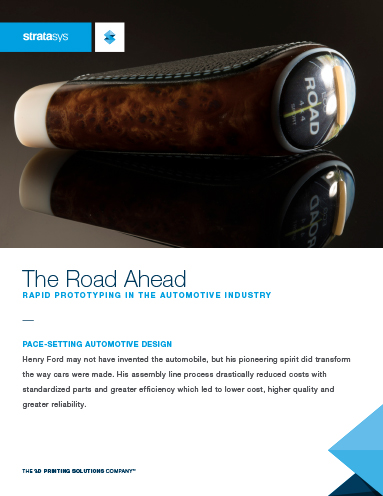
Rapid Prototyping in The Automotive Industry
Henry Ford may not have invented the automobile, but his pioneering spirit did transform the way cars were made. His assembly line process drastically reduced costs with standardized parts and greater efficiency which led to lower cost, higher quality and greater reliability.

DE's editors contribute news and new product announcements to Digital Engineering. Press releases may be sent to them via [email protected].
Follow DE






About Us · Contact Us · Editorial Team · Advertising · Privacy Policy · Subscriber Services · © 2026 Digital Engineering 24/7 · Peerless Media