Helping design and engineering professionals discover, evaluate and specify technologies and processes that shorten the design cycle and enable success.


Alert!
Digital Engineering ceased publication on July 1, 2026. This website remains available as an archive of engineering content.
For inquiries or information, please email [email protected].
Sponsored

May 2026 Special Focus: Artificial Intelligence in Design and Simulation
In this Special Focus Issue, learn about the latest developments in the integration of artificial intelligence into engineering workflows.

Design & Simulation Software Guide 2025
In this Special Issue, Digital Engineering presents its second annual guide to design and simulation software vendors.
Mathematical modeling and numerical simulation are widely accepted methods for product development, which makes sense: They have been around for more than half a century. As long as these tools have been available, their use has been restricted to simulation engineers. This creates a bottleneck in the development process, as design engineers wait for analyses and results. COMSOL provides the tools to sidestep this bottleneck by creating easy-to-use simulation applications and distributing them companywide.
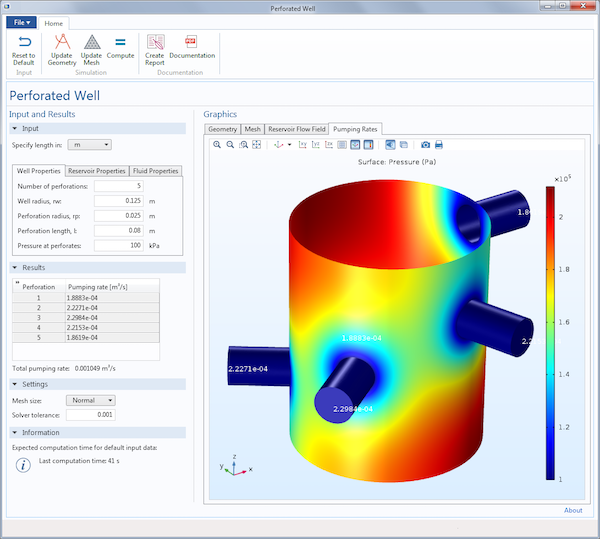
Simulation engineers create specialized applications based on the computational models they develop in the COMSOL Multiphysics® software. The applications enable anyone to test parameters and run repeated analyses without the simulation engineer, who can then focus on solving complex problems, developing innovative products, and building more applications.
For instance, Samsung Research America — a leading worldwide audio company — designs high-quality loudspeakers using simulation and applications. Get an inside look at their workflow in this blog post: www.comsol.com/blogs/samsung-amps-up-loudspeaker-designs-with-simulation/. Another example is Cornell Dubilier, a leader in manufacturing high-quality capacitors, which creates several applications for electrical optimization. “[We] create applications for other departments to let them test different configurations for their particular requirements and pick the best design.” says Research Director Sam Parler.
Collaborators are provided access to applications through two methods: compiling them into standalone executable files using COMSOL Compiler™ or distributing them via the application management tool COMSOL Server™. COMSOL Compiler™ is used to create compiled applications that can be run without a COMSOL® software license. COMSOL Server™ helps those who want to upload and manage applications for an organization and enable application users to run simulations via a web browser or desktop client — on any hardware, including phones and tablets.
Numerical simulation has changed since it first came about some 50 years ago. Through the use and distribution of applications, it has become even more powerful.
COMSOL, COMSOL Multiphysics, COMSOL Compiler, and COMSOL Server are trademarks or registered trademarks of COMSOL AB.
For more informaiton, visit www.comsol.com.



COMSOL is a global provider of simulation software for product design and research to technical enterprises, research labs, and universities. Its COMSOL Multiphysics® product is an integrated software environment for creating physics-based models…

Ebook download: Powering Clean Energy Solutions
In this ebook, we explore 6 cases where modeling and simulation were used to help overcome these new design challenges. Topics include water turbines, sand-based heat storage, hydrogen fuel cells, and more.






About Us · Contact Us · Editorial Team · Advertising · Privacy Policy · Subscriber Services · © 2026 Digital Engineering 24/7 · Peerless Media