Helping design and engineering professionals discover, evaluate and specify technologies and processes that shorten the design cycle and enable success.


Alert!
Digital Engineering ceased publication on July 1, 2026. This website remains available as an archive of engineering content.
For inquiries or information, please email [email protected].

Digital Engineering April 2026
In the latest issue of Digital Engineering, we take a look at the latest innovations in design for additive manufacturing, including the use of natural language inputs, social media cosplayers, and AI integration. The issue also includes a feature…

January Special Focus Issue: Design for Additive
In this Special Focus Issue of Digital Engineering, learn about the latest advancements in design for additive manufacturing, including new software tools, additive in automotive, custom medical devices, and more.
Scientists around the world don’t always have the tools they need for the job at hand. By way of analogy, they need their own spare room and laptop to really get anything accomplished. I’m not even talking about high-tech equipment. Plenty of scientists (and teachers) don’t have access to basic tools.
Tekla Labs is trying to ameliorate this problem by creating an online, virtual library full of 3D blueprints for basic laboratory equipment. The organization was started by students at the University of California, Berkeley after visiting a number of South American universities. Many of the university labs lacked what most academics in theU.S. would consider the most basic equipment, such as water baths and stir plates.
Each blueprint has been designed to be as easy to put together as possible, and to utilize commonly available materials. Scientists with access to a 3D printer can produce all manner of useful tools to help with their studies, teaching or research. As an example, purchasing a test tube rack can cost up to $20 per rack. A functional rack created with a 3D printer can cost a quarter of that.
As more 3D printers make their way into the wild, communities can grow around the printer’s capability, with the group as a whole sharing costs. Given that many of the parts for a RepRap printer can be produced using a RepRap printer, the possibility of increasing the number of available systems allows for growth.
In order to grow its virtual library, Tekla Labs held a contest called “PRINTmyLAB,” in which they called for open source designs for labs. Winners received a printed copy of their design and the top three entries in each category also received their choice of a Kindle Fire or SO Quad Oscilloscope.
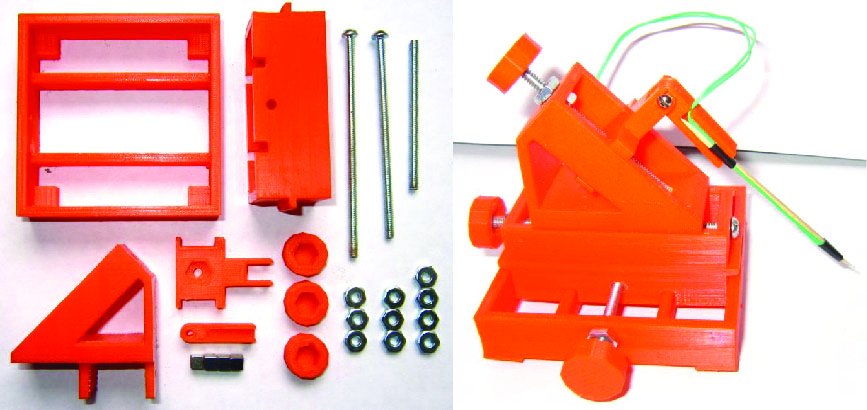
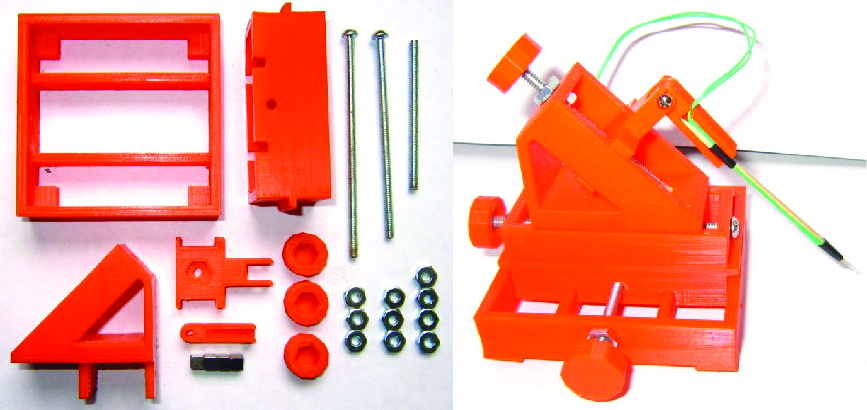
First place winners were “The Searcher,” a micromanipulator for precision neural recordings, and the “Petristencillator,” a set of master plates for sectoring Petri dishes. Other entries included a DIY microcentrifuge and a magnetic purification stand.
Below you’ll find a video that demonstrates how to create a centrifuge using 3D printed rotor and a Drimmel.
Sources: Tekla Labs, PC World


John Newman is a Digital Engineering contributor who focuses on 3D printing. Contact him via [email protected] and read his posts on Rapid Ready Technology.
Follow DE






About Us · Contact Us · Editorial Team · Advertising · Privacy Policy · Subscriber Services · © 2026 Digital Engineering 24/7 · Peerless Media